There is a disconnect between what we read about the seriousness of toxoplasmosis as stated on the Internet and what we experience in real life. Nobody is screaming and shouting about the damaging effect of toxoplasmosis on the human population in any area of the world. But if you believe what you read on …
Here are some notes on toxoplasmosis in an infographic. I have to be very selective on what to include and omit due to limited space. I have focused on the zoonotic nature of the disease and pregnancy as these are the areas of greatest concern. You can read a lot more by scrolling down …
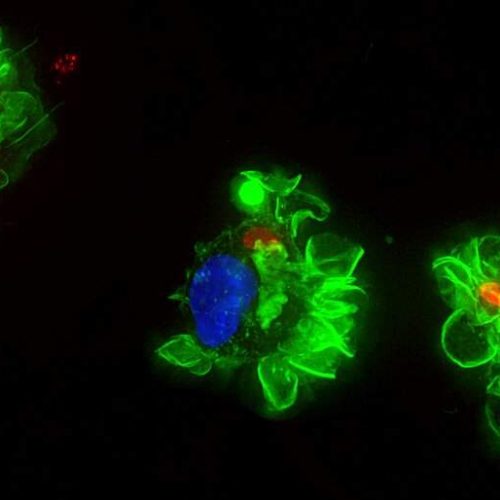
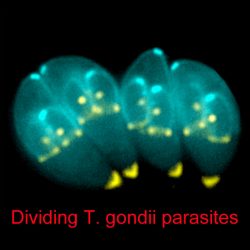
I have had to interpret a very complicated study on the Toxoplasma gondii protozoan parasite published on the Cell Host & Microbe website. But it is an interesting study if you take the time to try and interpreted as a lay person i.e., non-scientific person because this parasitic disease is very important in the …
The life-cycle of Toxoplasma gondii is complicated. People tend to oversimplify it. They see the domestic cat infecting humans with this protozoan parasite which is about the extent of general knowledge. It isn’t that simple; far from it. This article sets out to redress the balance and to mention an interesting study on a …
I declare my bias/interest: I am for the cat and against science which either purposefully or inadvertently maligns the cat. The question in the title is very big and very bold. The answer is that we don’t know, at present. However, quite a few scientists are investigating whether the domestic cat inadvertently is linked …
A lot has been said about toxoplasmosis and the possibility of contracting it through coming into contact with domestic cat faeces. This has particular significance with respect to pregnant women. Cats get toxoplasma infection by eating infected rodents, birds or other small animals. They can also get it by coming into contact with anything …
An interesting study dated 2003 titled: Prevalence of infectious diseases in feral cats in Northern Florida concluded that feral cats in TNR colonies are no more of a risk in terms of spreading disease to people or cats tban domestic cats. The basis for that statement is that feral cats cared for by volunteers …
A study has found that the protozoan parasitic disease called toxoplasmosis is more commonly found in wild animals that live near or in humanly dense urban areas. The chain of events is the obvious one namely that the domestic cat is the primary vector for toxoplasmosis because the domestic cat sheds toxoplasma gondii (T. …
Note: Some older videos on this page were hosted on Vimeo. That account has now been retired, so a few video blocks may appear blank. Thanks for understanding — there’s still plenty of cat content to enjoy!