We are referring to domestic cats. Perhaps wild cats do it as well. Some of them probably do and one species definitely does: the African wildcat, the ancestor of the domestic cat. I have just this minute watched my cat eat some dry cat food and immediately after eating he flicked or briefly shook …
In the image below I have tried to present a feel for what the Fertile Crescent was like around 10,000 years ago when ‘at least five different females from the wildcat population’ befriended farmers and founded one of the greatest populations of domestic animal companions the world has seen: the domestic cat. Of course, …
The title sounds too negative. It almost sounds as if it was written by a cat hater. But no, the words come from the world’s most prolific and best-known veterinarian/author in one of the best books on the domestic cat: Complete Cat Care. He is Dr Bruce Fogle DVM, and he likes cats. And …
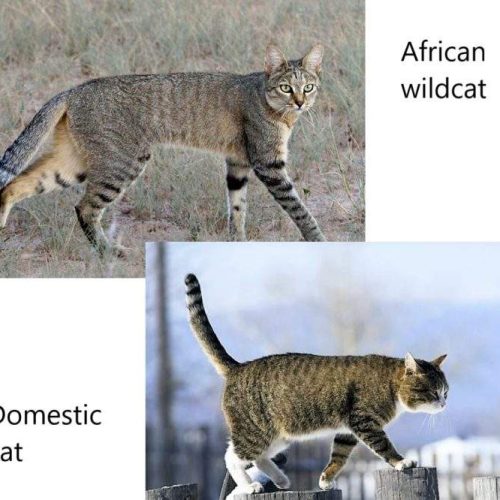
Intro: this page contains some opinions too! Here are 20 facts about the closest relations of the domestic cat. The Near Eastern wildcat aka North African wildcat is the ancestor of the domestic cat. There is one group of small wild cats which are very similar in appearance to the domestic cat, specifically the …
People ask the question: “Why are domestic cats and invasive species?” And the answer is that in most countries of the world domestic cats did not evolve in those countries but they were brought there by people. It is only when an animal either evolves in a certain place or its distribution extends to …
It’s a point worth making. You hear a lot about the first domestic cats coming into being about 10,000 years ago. These are the first N. African wildcats who befriended humans and vice versa; both benefiting in an act of ‘commensalism’ as it is called. These early pet cats were tamed wildcats. Their behaviour …
The question is asking for information about the world’s very first domestic cat. We don’t have that information. We have a rough idea when the North African wildcat was first domesticated but that is about it. The domestic cat’s skeleton is very, very similar to their wildcat ancestor. This makes it difficult to identify …
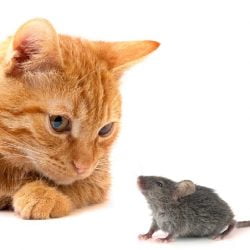
There are 3 reasons why domestic cats apparently torture their prey by playing with them. I list and discuss them here. It is a form of feline behaviour which at best irritates their human caregiver and at worst disgusts them. It does, however, provide the cat’s owner with an opportunity to save the mouse. …
Note: Some older videos on this page were hosted on Vimeo. That account has now been retired, so a few video blocks may appear blank. Thanks for understanding — there’s still plenty of cat content to enjoy!