The infographic by me summarises information about bicolour cats. I hope you find it useful. There are image links to more pages on piebaldism and bicolour cats after the infographic.
Note: I am indebted to Sarah Hartwell of messybeast.com for her knowledge on piebaldism and the images in the middle of the infographic about grading. Other source: me and Gloria Stephens of Legacy of the Cat.
My book on cat genetics (Robinson’s) tells me that there are three kinds of white spotting. Actually, it includes the all-white cat within cats described as having white spotting but, in this article, I will describe the following three types, (a) piebald spotting (b) gloving and (c) brisket spots and lockets. The pure white …
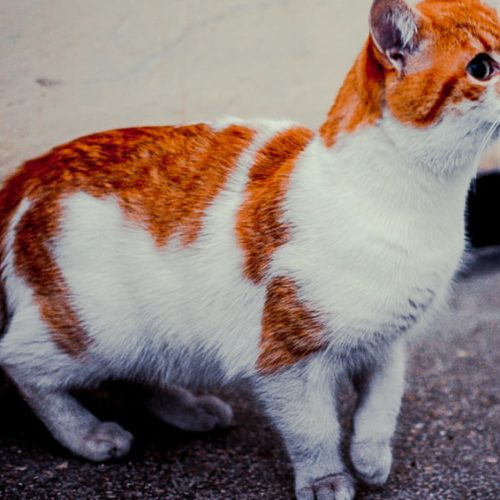
In the cat world ‘harlequin’ is a word that is occasionally (but rarely today) used to describe the bi-colour coat with more white fur than non-white fur. Bicoloured cats are white plus distinct areas of colour. For the harlequin, the coat should be 50-75 per cent white and 50-25 per cent coloured. This coat …
Cobweb leopards exhibit a form of vitiligo which in humans produces patches of pale, white skin due to a lack of melanin being produced by pigment producing cells called melanocytes. Glasgow Zoo, Scotland acquired a 10-year-old black leopard from Dublin Zoo, Ireland in the early 1980s. She was a cobweb leopard as she exhibited …
Note: Some older videos on this page were hosted on Vimeo. That account has now been retired, so a few video blocks may appear blank. Thanks for understanding — there’s still plenty of cat content to enjoy!