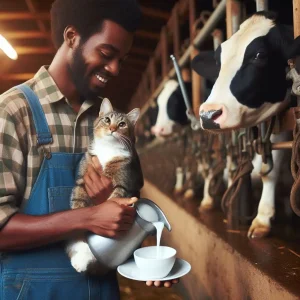
Avian influenza A(H5N1) in dairy cattle was passed to 12 out of 24 farm cats in raw milk and through direct contact on a single Texas farm and the effect was devasting (see quote below). RELATED: avian flu H5N1 Avian influenza, often termed “highly pathogenic,” particularly refers to strains of the virus that are …
The topic of feeding raw meat to pets, particularly dogs, has been previously debated. A recent trend involves feeding dogs raw meat, which may increase the risk of owners being exposed to antibiotic-resistant bacteria, as indicated by a study. Researchers discovered E. coli in 13 out of 15 raw meat samples, with a high …
This is a cross post. I feel obliged to try and make sure that cat owners understand the conclusions of a study referred to by many online newspapers. The study comes from Australia where arguably there is a strained relationship between domestic and feral cats and the population. Particularly feral cats which are denigrated …
Yes, cats can get toxoplasmosis from drinking unpasteurised milk. This is interesting because it still remains the case that in many countries people think that the domestic cat will enjoy a saucer of milk and sometimes it will be unpasteurised. Cow’s milk is not ideal for domestic cats as estimates suggest that a significant …
RELATED: Captive Pallas’s cats die of toxoplasmosis The fact in the title is true. Humans are indeed more likely to get toxoplasmosis from eating raw foods than from cat feces. Here’s why: Prevalence in raw meat: The parasite that causes toxoplasmosis, Toxoplasma gondii, forms cysts in the muscle tissue of infected animals. Consuming undercooked …
The purpose of this article is to ‘fact check’ or put some sensible reality into what I would consider to be sensationalist headlines in the news media about a study (which I can’t find sadly on the Internet) which according to the news media states that antibiotic-resistant superbugs are jumping from cats and dogs …
This is a rare fungal disease. It is called sporotrichosis and it affects humans, cats and other mammals. It is therefore zoonotic meaning it can be transferred from animal to human which is exactly what happened in a recent case in the state of Kansas, USA. A vet tech was handling a cat that …
Roughly twice as many viruses pass from humans to animals than from animals to people (findings of a recent study – see below for summary) Surprisingly, we find that humans are as much a source as a sink for viral spillover events, insofar as we infer more viral host jumps from humans to other …
Note: Some older videos on this page were hosted on Vimeo. That account has now been retired, so a few video blocks may appear blank. Thanks for understanding — there’s still plenty of cat content to enjoy!