
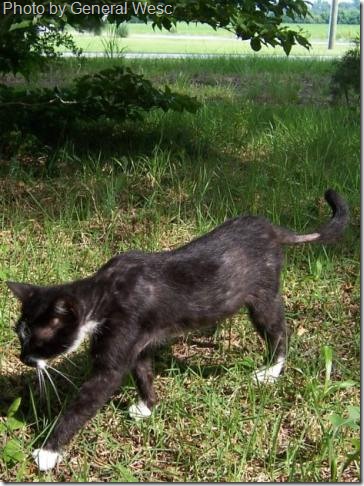
Hair loss in cats is often a frightening sight for pet owners who might immediately rush their companion to their veterinarian for a diagnosis. When it comes to the domestic cat, there are many conditions and diseases causing hair loss. Some instances are quite normal, while other hair loss in cats can indicate an illness that requires medical attention.
Please note: there are a lot of comments with photos with replies which may assist a visitor in diagnosing causes of hair loss or at least provide guidance on what to do next.
When self-diagnosing your cat’s illness, it is best to start with the most obvious cause and work away from that point. You’ll find that 90% of the cases of hair loss in cats is down to overgrooming due to stress or itchiness. Cats groom themselves (autogroom) when stressed because it is calming. Watch your cat and check to see if she is overgrooming. If so, ask questions about what might be causing stress.
RELATED: 10 signs that a domestic cat is stressed
Of course, it almost goes without saying that beyond dealing with fleas and lice (possible causes of cat hair loss) you should see a veterinarian. This page is meant to simply give some guidelines gleaned from extremely reliable sources. I set out below the possible causes of cat hair loss in the order of most likely cause.
Common Hair Loss Conditions in Cats
Loss of hair in cats doesn’t mean the end of the world, as there are plenty of reasonable explanations why excess shedding takes place. Many of the following common hair loss conditions are reversible and sometimes avoidable when an owner learns of the substances or circumstances that affect their feline.
Allergic and Irritant Contact Dermatitis
A cat may experience an allergic reaction when they become exposed to a variety of substances and objects that comes in contact with the skin. This may include metals (such as nickel), rubber, wool, plastic, and chemicals (dyes and carpet cleaners). Irritating substances, such as poison ivy, may also cause the inflammation that can lead to hair loss in cats. Additional symptoms include cat skin redness, small bumps and blisters, and itching.
Atopy (allergic inhalant dermatitis)
When a cat inhales house dust, pollen, or mold, an allergic reaction may follow. As a result, they may display redness, itchiness, inflammation in the ear, and hair loss. In some cases, an infection develops or a cat experiences hot spots.
Mange
It is a particular mite species that causes the infection that leads to itchiness, scales, and some hair loss in cats when the condition is severe.
Facial Alopecia
It is normal for cats to lose hair located between the eye and ear when suffering this condition. Usually, facial alopecia is seen when cats are between 14 and 20 months old. Shorthaired and dark-haired cats are the most affected.
Flea Allergy Dermatitis
Many cats possess flea bite hypersensitivity, where an intense reaction to the saliva of the flea is experienced. Common symptoms include extreme itching, redness, scaling, and hair loss. An infection may also develop as a result of saliva contact with the flea. See Feline Allergies (new window). Cats will lick excessively removing hair. Miliary dermatitis can sometimes be seen on the skin (red lumps).
Painful or itchy area and licked to relieve it
If an area of the cat’s body is painful, she may lick the specific area. If it is a disease that causes itchiness the licking will cover a wider area. As cats lick a lot anyway, under these circumstances she will over lick causing a potential hair loss.
Cornell University College of Veterinary Medicine refer to cat doing this as “fur mowers”. The area(s) licked help in diagnosis. Fleas, for example can infest areas around the neck (where a cat can’t lick) and also at the base of the spine before the tail begins. If a cat over-licks there it could be flees. In fact I regularly flee comb the hotspots on my cat to check for flea infestation as we feed a stray cat.
An allergy to pollen or food may in result in “fur mowing” the back and abdomen for example.

Clearly licking is normal but when it results in hair loss it is not and there will be an underlying problem. Lice and matting might provoke excessive licking but in my experience matting doesn’t. The first call then is to check for the simple and obvious mentioned above. If they are all clear it’s vet’s work and it may be due to stress.
Stress displacement behavior – licking – Feline psychogenic alopecia
Any number of reasons can cause stress in cat. But is it normal licking behavior. For sure cats like stability and routine. These are very important. For example, it can take many months (perhaps up to a year) to fully settle in to a new home. In the meantime, she may be stressed.
Licking can be a form of displacement behavior (some more on this subject – new window). When we are uncertain, we and trying to think through a difficult problem we scratch out heads ot bite out nails or fiddle with something! Cats do the same. The classic is to lick their nose (the human equivalent of head scratching). If it goes beyond that it can indicate severe stress and a habit. The route cause must be addressed. It will most likely be something that we have done to break the routine of destabilize the environment. These should be easy to rectify. It might be separation anxiety for example. On occasions I have given my cat a little bit of Rescue Remedy in her food to help with stress levels. A vet will probably prescribe a mild sedative and a change in lifestyle. And see next listing.
Pregnancy and Nursing Hair Loss
When a stressful situation (such as giving birth) takes place, a cat may experience hair loss. Sometimes a loss in hair can surface as a sudden symptom, which can spread across the entire body. When the underlying condition is treated or is no longer a concern, the hair will grow back.
Hyperthyroidism
Hair loss and strands that are easily pulled out are common symptoms of hyperthyroidism, which causes skin lesions in about 1/3 of affected cats.
Psychogenic Dermatitis
The constant licking that some cats possess as a habit can lead to hair loss. Some of the possible causes of this condition include stress, boredom, and a reaction to changes in their environment, such as a new member in the household. Symmetrical hair loss is a common symptom. As expected, the hair loss occurs in easily accessible places such as the inside of the hind legs and belly.
Ringworm
Several different kinds of fungus can cause the ringworm infection, which creates crusts, scales, and hair loss in cats. Cat ringworm is the same as human ringworm and it is transmittable from a cat to a human (zoonotic). This is a reason why (some say) a cat should not sleep on your bed (I totally ignore this).
Stud tail
You’ll see hair loss at the top of the tail near the spine. So, what is stud tail? It’s a condition which is described as being similar to acne as it is due to over secretion of the sebaceous glands. The hair becomes matted and greasy, and it may fall out hence the thinning of the fur.
Malassezia
This is another fungal infection as is ringworm. The full name is Malassezia pachydermatitis. It is a yeast commonly found on the cat’s skin. Normally it does not cause problems. Overgrowths cause problems. Overgrowths happen when there are immune deficiencies, bacterial infections and seborrhea. Hair loss is common with this infection. There are moist red areas. Vet will diagnose with skin scrape. Treatments include cleaning with benzoyl peroxide or chlorhexidine shampoo then applying miconazole ointment.

Please click on the link to be taken to another page. You will also remain on this page.
There are 200 comments over four pages and growing. There are many photographs and ideas for causes of hair loss. Please take the time to explore the comments. The comments are over four or more pages to allow the page to load in a reasonable time.
Rare or Uncommon Hair Loss Conditions in Cats
Sometimes hair loss in cats is not easily detected or beyond the remit of the average pet owner and it requires the assessment of a veterinarian in order to receive effective and accurate treatment. Below are a few instances that may or may not offer a straightforward remedy:
Apocrine Sweat Gland Cyst
Although a rarity in felines, water-filled nodules may appear in the head, neck, and limbs, which can cause hair loss in cats.
Alopecia Areata
With alopecia areata, patches of hair loss in cats are seen about the head, neck, and body. Itching is not a symptom of this condition. Usually, cats are able to recover from this suspected autoimmune disorder without any medical treatment.
Bacterial Infection
Hair loss in cats may take place when they are battling a bacterial infection caused by parasites, allergies, or a condition that affects the hormones.
Chemotherapy
When a cat undergoes chemotherapy as a treatment for cancer, they lose hair that eventually creates a soft and fuzzy appearance about their coat. Some cats may even lose their whiskers. After chemotherapy treatments are discontinued, the hair will grow back. Interestingly, the new hair may appear a different color or display a dissimilar texture.
Congenital Hypotrichosis
Kittens born with congenital hypotrichosis possess little to no hair. Any signs of hair are lost by the time the kitten reaches the age of four months.
Cushing’s Disease
When a cat produces or comes into contact with an increase of corticosteroids, they may experience a thinning of the skin, as well as hair loss. More on Cushing’s Disease.
Drug or Injection Reactions
Hair loss in cats sometimes occurs when they suffer a rare skin reaction to a drug that has been given orally, topically, or when inhaled. This type of reaction is most often seen when a cat comes in contact with penicillins, sulfonamides, and cephalosporins. Symptoms usually occur within two weeks of receiving the drug, which may also include itching, redness, swelling, ulcers, the formation of papules, and wound drainage.
Folliculitis
When an infection has attacked the hair follicles of a cat, pustules develop and open up to create crusts, which may itch and cause hair to fall out. Symptoms of folliculitis often surface on the face, head, and neck.
Solar Dermatosis
Some cats are more susceptible to the sun, where a reaction causes redness, scaling on the nose and ears, crusts, ulcers, and hair loss. This condition is mostly seen in cats with white ears.
Additional considerations that can lead to hair loss in cats include food allergies; feline acquired symmetrical alopecia (the symmetrical loss of hair on the on back of thighs, abdomen, and genital areas); granulomas (solid nodules); hair loss at the site of a vaccination (can last for months); infestation of lice; sebaceous adenitis (the unknown deterioration of the sebaceous glands); and seborrhea, which is inherited or part of a secondary infection.
Return from Hair loss in cats to the Home page
Sources for hair loss in cats:
- Header photo: Published under an Attribution 2.0 Generic creative commons license. The cat lost his hair after he broke his leg.

Thanks, but what I mean is did your vet declare that your cat is healthy? That’s what I need to know. Sorry for the follow up.
I will make the presumption that your veterinarian said that your cat was not ill with any diseases. If that’s the case then I would recommend you watch your cat carefully. It is possible that your cat is anxious and stressed for some reason that you might not be aware of.
And in order to calm herself down he/she is grooming herself too much in places that are accessible to her. The hair loss that I see are in places that are accessible to grooming. So, if after observing her you see her licking these areas then you can make a pretty firm decision that she is stressed.
The next phase would be to decide what is causing that stress. It will be something in her environment that might have changed. It could be another cat who is bullying her. It might be a stranger in the home. It might be a stranger outside the home i.e. a cat who is invading her territory. It might be noises and some other differences in her environment. Cats like the opposite to change.
I would be pleased if you could report back on these possibilities. In conclusion, is she healthy and if so, is she over-grooming? If so, what is causing the stress? That is the order of events. Good luck and thanks for asking.
9/10 cases of hair loss in cats are due to stress. That is the default answer to your question. And there is not stress it will be an illness which is yet to be diagnosed. I have a page on the illnesses that cause hair loss which you can access by clicking on this link.
And if you click this link you will be taken to a page which confirms what I just said about stress being the number one cause of hair loss.
Hello. Thanks for your response. The vet has not been able to diagnosis the problem. Based on the picture, I am curious to learn your opinion. Thanks.
Before I answer your question, could you please tell me if your cat is showing any signs of illness? Are there any other symptoms other than the hair loss that I can see in the photograph? Has your cat been at a veterinary clinic recently? I’m asking because I need to differentiate between hair loss because of illness and hair loss because of other reasons. When you respond to this question, I will then be able to, hopefully, provide you with a reasonable response.