Overview: Here are some facts about leopard cubs. A cub will normally be born as part of a litter of 1-3 but only half will usually survive into adulthood. A cub is born with eyes closed. The eyes open at about 10 days of age. A cub’s fur is grayer, longer, thicker and less …
As I stated in the title, the distribution of the common leopard is the widest of all the wild cat species. A natural consequence of this is that the habitats in which they live varies tremendously and is probably the widest range of habitats of all the wild cat species. being highly adaptable, they …
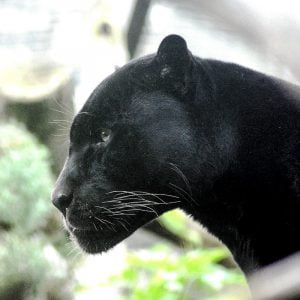
People search for a ‘black leopard picture’. Here are some good ones. Leopards can often have the appearance of being jet black but they are not. Sometimes a black leopard is very dark with a black or dark grey pattern but not completely black. They have ghost markings or the spots can be quite …
Introduction This page has been refreshed at Dec 28, 2021. This is necessary in order to keep an eye on the population numbers to see whether they are increasing or decreasing (nearly always decreasing) and on the cat’s distribution i.e. where they can be found, which usually shrinks year-on-year due to increased human population …
It seems that the biggest animal that a leopard has been recorded killing is an adult eland bull, an animal about ten times the weight of the male leopard which killed it. If the male leopard weighed around 70 kg (154 lbs) – a good weight for a male which averages around 60kg – …
When are leopards most active? The answer depends upon the location and the circumstances under which the leopard lives. Although it is true that in many areas leopards are mostly nocturnal, there are exceptions. Where they are hunted extensively or harassed by people they are nocturnal. Leopards are less nocturnal in areas where there …
They say that the pink leopard is the rarest of cats. They are sometimes referred to as ‘strawberry leopards’. Their coat has a faint pink hue due to what must be a spontaneous genetic mutation. It’s the kind of mutation which causes melanism in wild cats which makes the coat dark charcoal with ghost …
It is believed that the Arabian leopard is a subspecies of the common leopard although the taxonomy (species classication) of this cat is vague; There are question marks over whether it is a distinct subspecies but this appears to have been tentatively affirmed according to genetic analysis of a single wild leopard from Saudi …
Note: Some older videos on this page were hosted on Vimeo. That account has now been retired, so a few video blocks may appear blank. Thanks for understanding — there’s still plenty of cat content to enjoy!