This is a red herring in my considered opinion. There are indications that people are using Google to search for “catnip poisoning in cats”. There is one well-known website which discusses this topic together with symptoms, causes and diagnosis but they have nothing to say as is the case for all other major websites …
Everyone says that a cat cannot be poisoned by catnip (Nepeta cataria) in the conventional sense. The worse that can happen is that it may cause vomiting if large quantities are ingested and it may cause a headache and general malaise/lethargy, according to the Pet Poison Helpline. Other experts say the same thing. It’s …
We don’t know why some cats don’t react to catnip! That’s the complete and unhelpful answer. The experts think that a cat is predisposed to reacting to catnip because of their inherited genes. But we don’t know what genes are the triggers. The experts call it “the genetics of catnip sensitivity or susceptibility”. We …
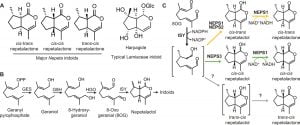
There is a proposition online in the news media that the similar chemicals in catnip and silver vine, nepetalactol and nepetalactone respectively, can help protect a cat from mosquitoes and perhaps other parasites, as well as giving them a high. Do cats deliberately seek this protection from mosquitoes? The idea comes from a research …
It is universally known that catnip induces playful actions such as rolling on their backs and rubbing. Catnip affects both domestic and wild cats such as lions, tigers and ocelots. Approximately 2/3rds of cats are affected. The effective substances ‘agents’ that cause this behaviour are nepetalactones. These are ‘volatile metabolites’. It is believed that …
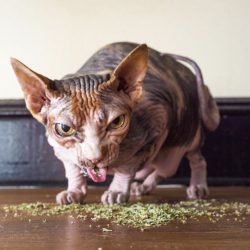
It makes you look carefully; a stange combination of a hairless cat and a tongue covered in catnip. In my experience domestic cats don’t really eat catnip when it is loose as we see in the photo. They lick it up and spit it out. This behavior is part of a package of odd …
What does catnip do to cats? In short it sets off a series of nerve stimulations from the nose to the centre of the brain where it has an effect upon the hypothalamus and the amygdala creating an emotional sexual response akin to responding to an artificial cat pheromone.
Thirty-three percent (one in three) of domestic cats do not respond to catnip and therefore sixty-six percent do. Eighty percent of domestic cats respond to silver vine another cat stimulant. Fifty percent of domestic cats respond to valerian root and the same percentage of domestic cats respond to Tatarian honeysuckle. Of the cats that …
Note: Some older videos on this page were hosted on Vimeo. That account has now been retired, so a few video blocks may appear blank. Thanks for understanding — there’s still plenty of cat content to enjoy!