
In other words does L-lysine help domestic cats control the feline herpes virus which is very prevalent in cat rescue shelters and catteries? The feline herpes virus is one of two which causes cat flu. The other is calicivirus. The virus can lay dormant and flare up under stress. During these flare ups vets sometimes recommend L-lysine to decrease viral reproduction.
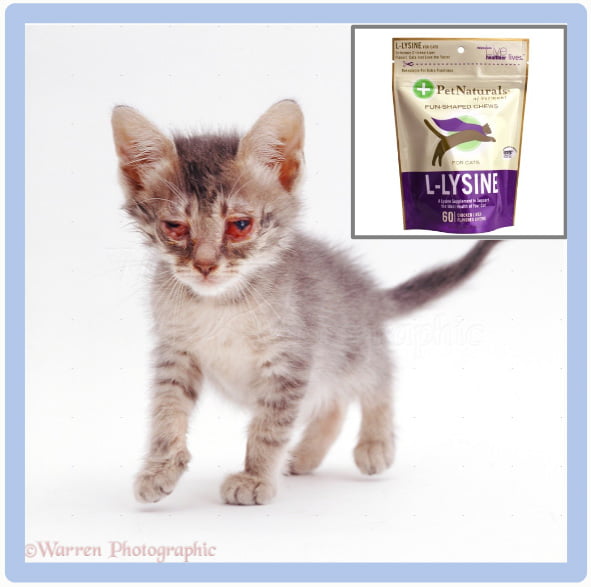
Lysine is an essential amino acid. L-lysine has many supporters perhaps among cat breeders and people involved in caring for many cats. Research on humans suggested that large amounts if this amino acid inhibited human herpes virus in cell cultures (artificial growth of cells in an ideal environment).
I wrote the following years ago about this product (this is a shortened/amended version):
“…I noticed that a number of cat breeders use a food supplement called L-lysine. Experienced cat keepers and breeders say it can control the feline herpes virus. Users of one particular brand of Lysine, Duralactin Feline L-lysine, say that it is one of the best ways to control herpes, both feline or human.
One purchaser of this product, who looks after “special needs cats” suffering from herpes says that “when there is more lysine (and therefore a greater proportion of lysine compared to arginine), viral replication is suppressed and cytopathogenicity (pathological changes in cells) is inhibited”.
Duralactin Feline L-lysine is apparently very attractive to cats. They love the taste of it; so no problem administering it. A well known Bengal cat breeder simply buys lysine products made for humans in capsules and crushes them with a spoon and sprinkles the powder on cats food.”
In the intervening years since I wrote this, science has become more familiar with L-lysine and it efficacy or otherwise in controlling the dreaded herpes virus in cats.
Sadly it is bad news for L-lysine fans. The petmd.com website reports (August 2014) that L-lysine is ineffective in suppressing herpes virus reproduction.
“[there is] little justification for the use of L-lysine in the treatment of feline herpesvirus 1 in cats.”
The research which came to this conclusion ‘corrected some of the technical flaws in the original research’. The recommendation is to ask your vet for alternative treatments if your cat is on L-lysine.
I suspect that many cat owners will ignore the findings of this research because they have first hand experience of the successful use of this product. Do you?

I absolutely swear by the stuff. I sprinkle it (plus a probiotic ) on the kitties wet food. I have seen improvement in overall health plus a decrease in sniffles.
Yes we use l-lysine powder which was recomended to us by several vets 20 years ago . A recent group of kittens diagnosed with Herpes was put on antiviral drugs and l-lysine 2 weeks ago.
Thanks Elisa. Useful info. It all adds to the page.
Thanks for your input Roslyn. It is always nice to hear from people who have first hand experience.
I have some and have some and have used l-lysine in the past for uri’s, but I’m not really a fan. Have not seen any significant improvement with its use.
We use l-lysine for skin conditions. A few of our cats get what the vet nicknamed “the crusties” and the l-lysine helps a lot. Where the cats used to need 4 allergy shots a year for them they only need 2 now. As far as URI’s go it hasn’t seemed to help but since we’ve started feeding grain free food the URI’s have all but ceased.