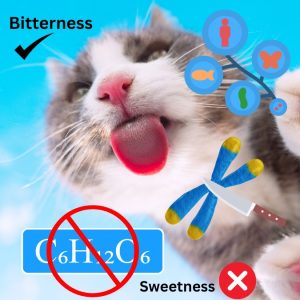
This is about the science – which is about the genetics of all the cat species – behind the failure of cats to detect sweetness in their food. We know that cats can’t detect the taste of sweetness in their food but what happened? It is a bit strange when you think about it …
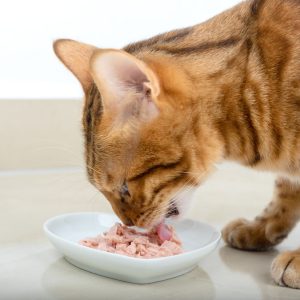
Domestic cats have the required ‘umami’ taste receptors on their tongues to respond well to an enzyme called inosine monophosphate and an amino acid called free L-Histidine which combine to produce a strong umami taste. Cats enjoy these taste receptors thanks to the inheritance of Tas1r1-Tas1r3 genes. The umami taste is described as the …
A domestic cat’s sense of taste is not quite as good as ours which is reassuring because in many respects the domestic cat’s senses are superior to ours. However, as you might know, they have difficulty in tasting sweetness. Like us, the domestic cat responds to 4 basic tastes: sour bitter salt and sweet. …
Note: Some older videos on this page were hosted on Vimeo. That account has now been retired, so a few video blocks may appear blank. Thanks for understanding — there’s still plenty of cat content to enjoy!