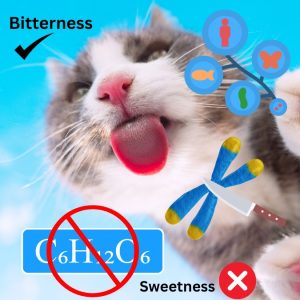
I confirmed some of the information in the infographic by discussing it with AI (ChatGPT). Here is a transcript of that conversation. I started by reading Dr Desmond Morris’s book Catlore on this topic, hence the question in the dialogue. Question: Can domestic cats taste sweetness? Response: No, domestic cats cannot taste sweetness. Cats, …
I guess by now a lot of us know that dogs are very different to cats in tasting sweet substances, usually foods. The infographic below explains the difference if you were unaware of it. The underlying cause of this difference is that the dog is an omnivore in practice while the cat is a …
A lot has been said about the inability of the cat to taste sweetness. According to Bing’s Co-Pilot it’s artificially intelligent bot, it’s because “unlike most mammals, cats lack 247 base pairs of the amino acids that make up the DNA of the Tas1r2 gene which is essential for sweet perception.” This was due …
This is about the science – which is about the genetics of all the cat species – behind the failure of cats to detect sweetness in their food. We know that cats can’t detect the taste of sweetness in their food but what happened? It is a bit strange when you think about it …
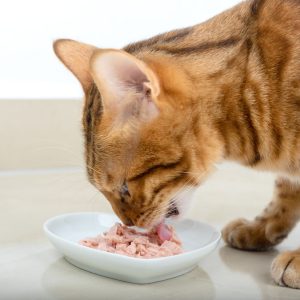
Domestic cats have the required ‘umami’ taste receptors on their tongues to respond well to an enzyme called inosine monophosphate and an amino acid called free L-Histidine which combine to produce a strong umami taste. Cats enjoy these taste receptors thanks to the inheritance of Tas1r1-Tas1r3 genes. The umami taste is described as the …
A domestic cat’s sense of taste is not quite as good as ours which is reassuring because in many respects the domestic cat’s senses are superior to ours. However, as you might know, they have difficulty in tasting sweetness. Like us, the domestic cat responds to 4 basic tastes: sour bitter salt and sweet. …
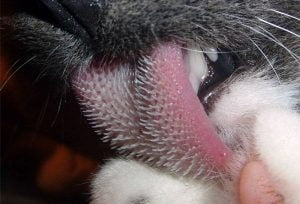
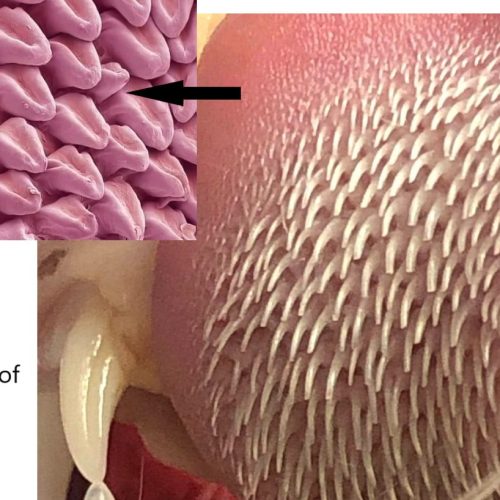
The feline tongue is a wonderous element of their anatomy. It can achieve a lot, thanks in part to the backward facing papillae made of keratin attached to the upper surface. These spines do a lot. Here is a list of 13 benefits to the cat when using their tongue. RELATED: 2 different types …
I confess that I’m confused. I have made the common-sense deduction that there are 2 different types of backward facing papillae on the domestic cat’s tongue. I have come to this conclusion for the following reasons. There are many photographs of the papillae on the cat’s tongue on the Internet. These are well-known images. …
Note: Some older videos on this page were hosted on Vimeo. That account has now been retired, so a few video blocks may appear blank. Thanks for understanding — there’s still plenty of cat content to enjoy!