The appearance of this jungle cat, no doubt photographed at a zoo, caught my eye for the reason that he/she has the appearance of dog or wolf or even a species of fox. In short, to a certain extent, a canine rather than a feline appearance. The official description of the jungle cat does …
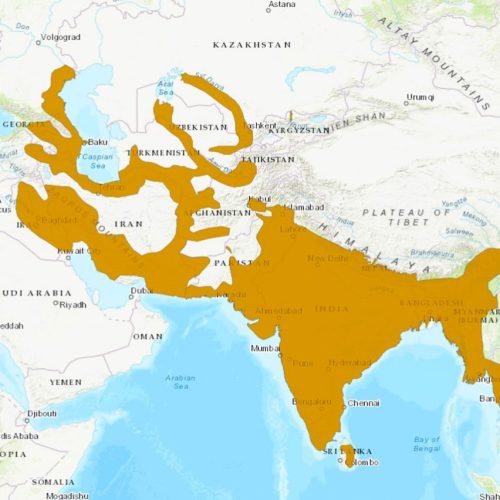
Below is the most recent distribution map of the jungle cat. It comes from the IUCN Red List and it is dated 2022. Click on it to see a larger version. The disappointing aspect of this map and all the maps produced by the Red List is that the date of the assessment is …
OVERVIEW: Felis chaus is the scientific name for the jungle cat; a small wild cat species that has a passing similarity in appearance to the Abyssinian purebred cat. The coat is plain tawny grey and ticked. Its color varies slightly. It is found from Turkey to Cambodia – a very wide distribution. Its name …
This is a great picture of this medium-sized wild cat species called the jungle cat (Latin, scientific name Felis chaus) together with 15 selected facts. The picture was taken by Lynn Griffiths and is published on the Flickr website. Below are 15 facts about this cat which is less often discussed than other cat …
Yes, jungle cats purr but please read on…I am referring to the species of small cat called the ‘jungle cat’ (Felis chaus) and not wild cats in general that live in the jungle. The jungle cat is a small non-specialised cat. Ironically, they are not normally found in the jungle but prefer swamps, tall …
The jungle cat is a small wild cat species (“somewhat larger and lankier than domestic cats”) living over a large distribution from the Middle East to the Far East. Over this large area it coexists with other carnivores of a similar size. There is not much information on what eats jungle cats. However, I’ll …
Some wild cats eat fish. For some species, fish are part of their diet because they like to live near water. For example, a small but powerful wild cat which eats fish is the fishing cat. This cat is an excellent swimmer (in fact all wild cats are at least capable swimmers). It has …
The DNA of all domestic cats has no trace of any wild cat species other than the African wildcat (also Near Eastern wildcat and Arabian wildcat – felis silvestris lybica). However, 10,000 years ago, there were a number of other suitable wild cat candidates who could have become the ancestor of the modern-day domestic …
Note: Some older videos on this page were hosted on Vimeo. That account has now been retired, so a few video blocks may appear blank. Thanks for understanding — there’s still plenty of cat content to enjoy!