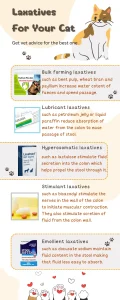
The information in the infographic comes from Dr Bruce Fogle, the UK’s foremost veterinarian and author. It is vet approved. Seek vet advice on the most appropriate type of laxative for your cat. The information about feline constipation is also veterinarian approved. RELATED: 17 causes of constipation in domestic cats Notes on feline constipation …
You will need to be aware of your domestic cat’s toilet habits to assess whether they are constipated or not. Most cats have one or two stools a day but some cats have a bowel movement every two or three days. They are likely to be constipated. If there is a litter box a …
By Ruth There is nothing to make a cat guardian feel helpless like watching our feline friend in distress and not being able to do anything about it. My cat Monty, who has been my faithful companion for ten years now, was having some difficulties with constipation recently and I think I was almost …
Metamucil (Psyllium) is a human-use treatment for constipation. Is it safe for cats? There is some confusion on the internet. The simple answer is that it is not FDA approved for cats and dogs (in the US) as far as I am aware but that it is safe for cats provided precautions are taken …
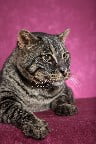
This is a rare cat with an unusual appearance. Cleo looks very stocky and has a very definite wild appearance which is unsurprising because she is a wildcat hybrid. She is cross between a fishing cat which is quite a strong medium-sized wildcat and a melanistic spotted tabby cat which in this instance is …
Feline constipation is a fairly common condition that many cat owners may encounter over the course of their kitty’s lifetime. Since healthy cats normally will pass one healthy bowel movement a day; if your cat is only defecating every few days, is consistently passing hard, dry stool, straining while trying to defecate, has a …
By Sandra Murphey with intro by Michael. There is a page on PoC written years ago about home treatments for cat constipation. Sandra has added to the page in a useful comment, which I believe should seen by more visitors than are likely to read her comment. Hence this article. Sandra tackled her cat’s …
By Bruce in North Dakota, USA Intro by Michael: Occasionally chronic constipation is due to an enlarged, sluggish colon that is not working properly; it doesn’t contract to push the feces out. This condition is called megacolon. Feline megacolon requires constant treatment. Bruce, a welcome visitor to PoC, devised a treatment for his cat …
Note: Some older videos on this page were hosted on Vimeo. That account has now been retired, so a few video blocks may appear blank. Thanks for understanding — there’s still plenty of cat content to enjoy!