The answer is no and I’ll explain why. The classification of the species is decided by experts and it is still not fully settled. Early on, up to 200 years ago, scientists got the classifications wrong or a least it has been adjusted and improved. Perhaps at one time they thought that clouded leopards …
The photograph shows a group of men surrounding a dead leopard. The news headline is ‘Human-leopard conflicts increase’. Macho men like to demonstrate their courage and skill in killing leopards who wander into urban environments. This is where a lot of the direct human-leopard conflict takes place. You see many disturbing pictures of leopards …
The name ‘hunting leopard’ was generally used for the cheetah (Acinonyx jubatus) until recent times. The name fell into disuse because it caused confusion with the name of the true leopard (common leopard) – Panthera pardus. So a hunting leopard would be a cheetah in the old days. The name ‘hunting leopard’ does not …
“Leopard cubs are born after a gestation period of about 96 days, although zoo records suggest that gestation can take anywhere from 90 to 105 days.” The information is a direct quote from the premier book on the wild cat species, Wild Cats of the World by Mel Sunquist and Fiona Sunquist. They are …
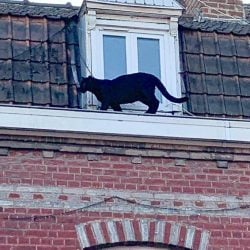
This is a genuine black panther. It is not that big because the cat is 6-months-of-age. The cat is a melanistic jaguar or leopard. It is more likely to be a leopard. The cat was owned illegally by a French person and has been captured and tranquillised. ‘Black panther’ does not describe a species …
A slice of day-to-day life of the leopard in the Kruger National Park, in northeastern South Africa. It is one of Africa’s largest game reserves. Nothing dramatic happens but the leopard knocks a squirrel off the tree to the ground and then follows. The leopard’s great climbing skills are very evident. It is also shows …
This is Mumbai, India where they have a compact nature reserve very near or inside the city. There are leopards inside the Sanjay Gandhi National Park. I am guessing but it seems likely that the leopard in the video wandered out of the reserve into someone’s home looking for food. I seems remarkable and …
In a previous post, some time ago, I explained why snow leopards have very long tails and this answer is along similar lines. Mel and Fiona Sunquist in their book Wild Cats Of The World describe the leopard’s tail as: “The long, thin tail is about 60 to 75 percent of the head and …
Note: Some older videos on this page were hosted on Vimeo. That account has now been retired, so a few video blocks may appear blank. Thanks for understanding — there’s still plenty of cat content to enjoy!