There is an astonishing story about a sand cat eating a prodigious amount of food which answers the question. A professor whose name is H. Mendelssohn working at Tel-Aviv University (the sand cat is found in Israel) wanted to find out how much an adult sand cat could eat at one sitting if feed …
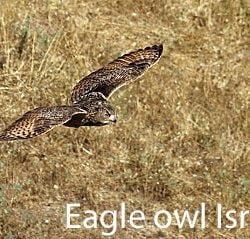
Sand cats have few large terrestrial predators to fear. Sub-adult sand cats are sometimes killed by eagle owls and in some areas of their range golden eagles, jackals and wolves occasionally kill adult sand cats. Aside from these predators the sand cat has few enemies. This is why they are so docile around people. …
Big ears tell us that the sand cat relies heavily on sound, and possibly picking up vibrations in the ground, to detect prey. The sand cat has huge ears (the ear flaps or ear pinnae). This small wild cat also has large tympanic bullae. This is the space or cavity behind the ear drum …
Rashed Al Qamzi, who I believe is a supervisor at Al Ain Wildlife Park and Resort (believed to be in Riyadh, Saudi Arabia), says that sand cats do purr but in a slightly different and more subtle way to domestic cats. I will presume that he has first-hand experience of listening to the sand …
On the internet people ask if sand cats make good pets. The same question applies to other small wild cats. There are a lot of people who fancy the idea of having a small wild cat as a pet because they look awesome. To many people the small wild cats are more eye catching …
Officially sand cats are not endangered. So there! The IUCN Red List categorise this small wild cat as Least Concern. This is the most positive classification under the Red List scheme. The classification has improved from Near Threatened in 2011. This does not mean that people should be complacent. Almost invariably the survivability of …
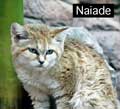
Today, there is a splash of online news activity about the charming, female sand cat, Naiade, who has just died at El Paso Zoo at the old age of 17. This is an exceptional age for a sand cat in captivity because, as stated in the title, this wild cat species doesn’t do well …
The DNA of all domestic cats has no trace of any wild cat species other than the African wildcat (also Near Eastern wildcat and Arabian wildcat – felis silvestris lybica). However, 10,000 years ago, there were a number of other suitable wild cat candidates who could have become the ancestor of the modern-day domestic …
Note: Some older videos on this page were hosted on Vimeo. That account has now been retired, so a few video blocks may appear blank. Thanks for understanding — there’s still plenty of cat content to enjoy!