There was a craze on the Internet recently about cats eating ice cream and filming their reaction (brain freeze). The world is divided into two groups on this activity. There are those who find it amusing and there are those who regard it as animal abuse. I am in the latter group. It is …
It looks as though domestic cats pluck their claws but they are in fact nibbling or chewing off the old outer-casing from their claws. They use their small incisor teeth which clamp around an individual claw encouraging the outer sheath to disconnect and fall to the ground. Another way that cats remove the outer …
Cat hair grows to a genetically predetermined length, which occurs during a growth period lasting 60-90 days, called anagen. There is then a short transitional period called catagen followed by a rest period, telogen, which lasts between 40 to 60 days. The cycle then restarts. Hair Loss in Cats I have relied upon the …
Dogs pant more than cats because their chosen method of temperature regulation and cooling is panting whereas for cats it is depositing saliva on their fur together with panting in extreme circumstances. The difference between cats and dogs with respect to losing heat and temperature regulation is that cats lick themselves, deposit their saliva …
Yes, tigers do have stripes on their skin. The stripes are actually “in” and “on” the skin. This is because, as I understand it, even when a tiger’s fur has been shaved there remains a small segment of hair shaft inside the hair follicle (and just above it), embedded into the skin. This hair …
Yes, lions do sometimes lose some of their teeth as this excellent photograph by Ernest Porter shows. It was taken in the Kgalagadi Transfrontier Park, South Africa. This male has lost his lower incisor teeth bar one and he has broken off one of this canine teeth on his lower jaw. There are three …
The domestic cat has a tendency to be more active at night although they are not wholly nocturnal. They are described as crepuscular, meaning active at dawn and dusk when hunting is more successful. In general, when possible they tend to be active when it is dark and for this reason evolution has been …
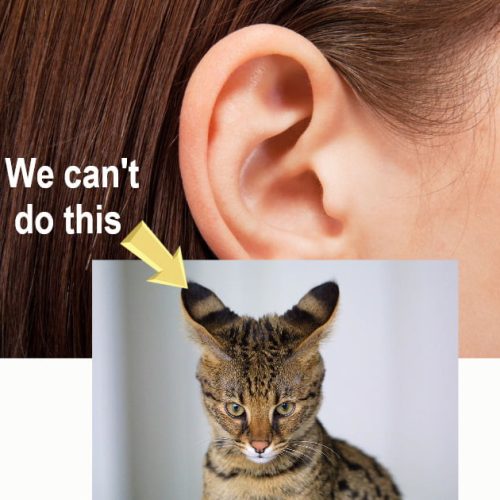
We know how mobile the visible part of the cat’s ear is. They have over 30 muscles to move their ear flaps (pinnae). They often listen to sounds behind them without turning their head towards the sound. It’s impressive and it looks as if they don’t care about you when you are talking to …
Note: Some older videos on this page were hosted on Vimeo. That account has now been retired, so a few video blocks may appear blank. Thanks for understanding — there’s still plenty of cat content to enjoy!