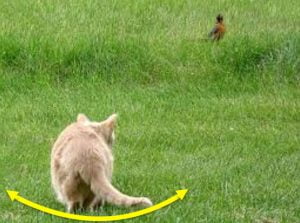
The interesting aspect of domestic cat tail quivering is that it occurs during what appears to be two entirely different circumstances. In the infographic I explore a possible connection between these circumstances in the emotional state of the cat and the message that she/he wishes to impart to others. Nature’s evolution dictates that there …
The origin of the domestic cat ‘tail-up’ body language greeting is interesting and important as it highlights a central element in the human-to-cat relationship, namely that cat caregivers are perpetual mothers to their adult cats which serves to indoctrinate the adult cat into maintaining kitten behaviors one of which is the tail up greeting; …
RELATED: How many tail-signals does a domestic cat make? The infographic and mini-video is deliberately kept succinct and to the point despite which the information is accurate and covers the essentials. Dogs are tail waggers while cats are not really. Dogs indicate happiness with tail wagging while cats indicate the same emotion with the …
The very short two second video shows the feline behavior that I am referring to in the title. It is long enough to get the message across 🙄. I first saw this form of cat tail action/body language many years ago in Notting Hill Gate, London when an abandoned cat saw me after I …
Well, in answer to the question in the title I think it’s about 13 but you may disagree with me and if you do then please leave a comment! Here is my list. RELATED: Why are cats’ tails so long? Tail curves gently down and then up again at the tip: this is a …
Essentially, domestic cats use their tail as a means of communication and its position conveys their emotions and intentions. A domestic cat holds their tail vertically – called the “tail-up” position – when greeting a friendly cat. They’ll do the same when greeting their owner. It’s a sign of relaxed confidence in the encounter. …
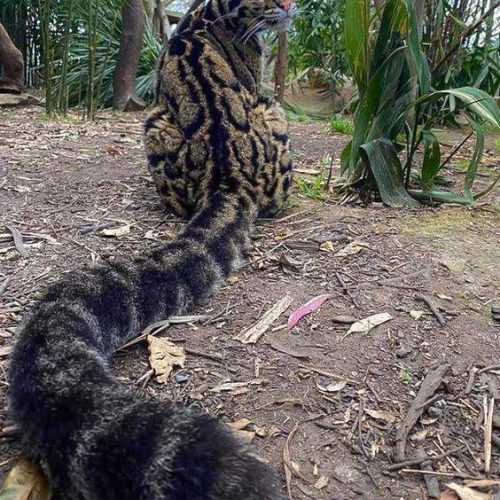
Where Do Clouded Leopards Live? The clouded Leopard is about the size of a small leopard but, in my opinion, it’s tail relative to its overall size is perhaps the longest of all the felids except for perhaps the snow leopard’s (see below). Fiona Sunquist in her book Wild Cats of the World modestly …
I am discussing the domestic cat’s tail. Having thought about this for the first time, I’ve decided that the positioning and movement of a cat’s tail is between a voluntary and an involuntary action. Therefore, it does not quite have a mind of its own but neither does the cat have direct control over …
Note: Some older videos on this page were hosted on Vimeo. That account has now been retired, so a few video blocks may appear blank. Thanks for understanding — there’s still plenty of cat content to enjoy!