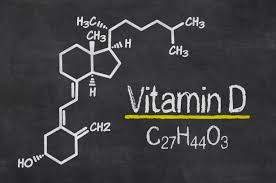
Just prepared this infographic about domestic cats getting vitamin D from sunlight – or not! There is a lot of misinformation (I believe) on the internet on this topic from websites which has fed through to the AI chatbots which ‘scrape’ the internet for information. If the websites are incorrect, the AI chatbots are …
I am proposing that the pet food manufacturers consider creating a hybrid ‘wet’ food which is suitable for both humans and cats. My research indicates that it is technically feasible as both have the same nutritional requirement with, perhaps, one difference: Vitamin A. It appears that cats need more of this vitamin that humans …
Our study supports that vitamin B6 dietary supplementation may be indicated in junior to adult animals diagnosed with an infectious, chronic, or acute condition or healthy cats with body weight ranging from optimal to overweight. In older cats, even if healthy, underweight to optimal cats appear to be at risk of vitamin B6 deficiency. …
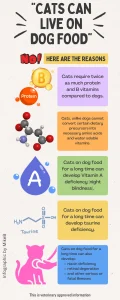
The infographic explains in a concise way why the belief by some owners that cats can live on dog food is entirely wrong as due to dietary deficiencies, over time, the cat will become seriously ill. As nearly everyone knows – largely thanks to the internet – cats are predators who’ve evolved to be …
Yes, domestic cats can eat eggs but there’s stuff to discuss and the answer should be qualified with a caution about cats eating raw eggs because of the danger of a bacterial infection. Ingredients Egg yolk makes up 30% of an egg and it is that part which feeds the embryo and therefore it …
Domestic cats do not need vitamin supplements as long as the food that you provide them with is complete and balanced and of high quality. High quality, complete cat food contains all the vitamins that domestic cats need. And if you are not providing your cat with a high-quality cat food you are unlikely …
Micronutrients in a domestic cat’s diet refers to essential amino acids, fat-soluble vitamins, water-soluble vitamins, minerals and essential fatty acids. Macronutrients refers to protein, fat, carbohydrates and fibre. Cats, unlike other animals, cannot manufacture essential fatty acids or essential amino acids. Neither can they manufacture vitamin A. Cats don’t automatically eat foods which are …
We hear a lot about the cat being a ‘strict carnivore’ (obligate carnivore) but what does it mean in practical terms to the person looking after their cat? I’d like to explore that briefly in this article. The domestic cat is said to have “nutritional idiosyncrasies”. In other words a cat’s diet is idiosyncratic …
Note: Some older videos on this page were hosted on Vimeo. That account has now been retired, so a few video blocks may appear blank. Thanks for understanding — there’s still plenty of cat content to enjoy!