Natural selection and selection pressures over millions of years of evolution is the reason why the Andean mountain cat has a predominantly grey coat while the sand cat has a sandy-coloured, even coat. These small wild cats illustrate how evolution works. The process is not about cats consciously adapting to the habitat where they …
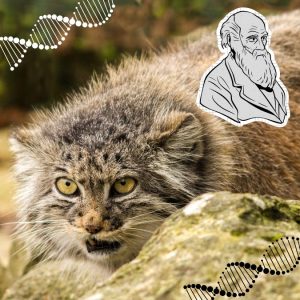
Pallas’s cat (Latin, scientific name: Otocolobus manul) is considered to have the thickest coat of all the cat species. The obvious conclusion is that this small and charming-looking wild cat species needs a thick coat because they live in a very cold and harsh habitat. I’m told that the coat is so dense that …
I may be hard for some people to understand that cats were present on planet Earth 35 million years ago. These were the first ‘true cats’. The era is called the Oligocene. This first cat has the Latin name: Proailurus. The name is a merging of ‘pro’ meaning early and ‘ailurus’ meaning cat from …
To its great cost, the clouded leopard has a very distinctive and attractive coat pattern resulting in human persecution. The coat is brown and therefore not like the forest canopy in which it lives but the patterning is good camouflage when looking up from the ground at the branches and jungle foliage. And behind …
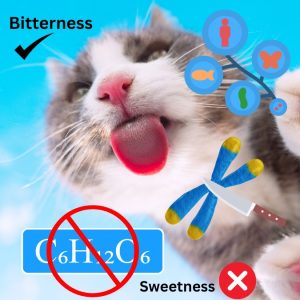
This is about the science – which is about the genetics of all the cat species – behind the failure of cats to detect sweetness in their food. We know that cats can’t detect the taste of sweetness in their food but what happened? It is a bit strange when you think about it …
This wonderful photograph of a Canada lynx padding its way through snow amply illustrates the enormous paws of this medium-sized wild cat weighing approximately 8-11 kg. It is a wild cat species which closely resembles the bobcat but the paws of the bobcat are much smaller because it has not evolved to live in …
This is a brief discussion on the well-known domestic cat’s meow and talkative cat breeds. You will see some websites proclaiming confidently that certain cat breeds are more talkative than others but I wouldn’t be so certain. Often it is an individual cat trait and it also depend a lot on the relationship between …
You can categorise domestic cats two ways: purebred and random bred. The default category is random bred. There are far more random bred cats than there are purebred cats. Random bred cats procreate when not sterilised under the process of natural selection. This means that the cats decide with whom to mate. In the …
Note: Some older videos on this page were hosted on Vimeo. That account has now been retired, so a few video blocks may appear blank. Thanks for understanding — there’s still plenty of cat content to enjoy!