Here I am trying to summarise all that is felid in a short infographic for general use. The central point is that the domestic cat thinks they are a tiger. The toy dog thinks they are a wolf. That’s why they behave and look the way they do. It is always worth remembering that. …
Normally domestic and unowned cats have a tendency to retreat and hide when confronted with something or someone that frightens them. They do this silently as making a sound during this action would be pointless. But if they are cornered and can’t run off, they will be forced to defend themselves and part of …
In the image below I have tried to present a feel for what the Fertile Crescent was like around 10,000 years ago when ‘at least five different females from the wildcat population’ befriended farmers and founded one of the greatest populations of domestic animal companions the world has seen: the domestic cat. Of course, …
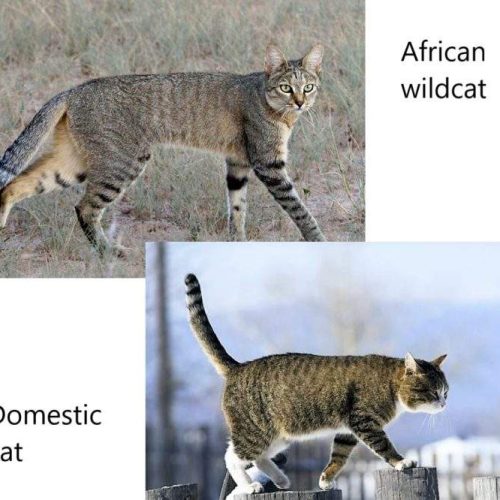
The infographic answers the question as best I can. It is not clear when the multitude of different domestic cat coats first emerged through natural selection (evolution) except for the classic (blotched) tabby which emerged in the 18th century. But as the domestic cat is a domesticated North Eastern wildcat which is a rather …
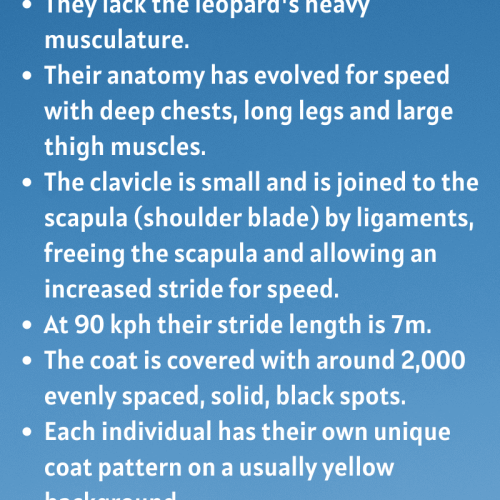
This is a free-to-use infographic describing the cheetah. It has to be very compact but the salient points are made. The cheetah is almost entirely built for speed. It is the way the cat has evolved. It’s talent and ability to catch prey is built around speed at up to around 70 mph (max) …
The cat skeleton is both strong and light having evolved for speed and agility, which is demonstrated in the cat’s wonderfully graceful movements including its jumping and climbing skills. The back is highly flexible, which is geared for speed. And the shoulder blade (scapula) is unattached to the main skeleton providing more flexibility. The …
Intro: this page contains some opinions too! Here are 20 facts about the closest relations of the domestic cat. The Near Eastern wildcat aka North African wildcat is the ancestor of the domestic cat. There is one group of small wild cats which are very similar in appearance to the domestic cat, specifically the …
Here are 12 facts about the digitigrade foot posture of cats. Yes, most cat owners realise that their cats walk on their toes but if you were unsure, now you know 😃. There are three categories of foot posture (item 8 below). When cats walk, they have a direct register cat gait – the …
Note: Some older videos on this page were hosted on Vimeo. That account has now been retired, so a few video blocks may appear blank. Thanks for understanding — there’s still plenty of cat content to enjoy!