In a study conducted at Lincoln University, UK it was found that: ‘most cats used the visual cue to learn the location of the food’ (by ‘cats’ she means the domestic cat – felis silvestris catus). The participating cats had a choice: use your nose or your sight and 4 out 6 used their …
Hair is mainly made up of keratin. It is the same material that a cat’s claws are made of. Keratin is a protein. Because hair is made up of protein, hair growth uses up a good percentage of a cat’s protein intake. A cat’s coat is made up of guard hairs, bristle or awn …
While some research scientists’ minds may be in a dither over this conundrum, kitty guardians have absolutely no problem answering this question; cats are extremely smart and downright resourceful. Researchers have such a difficult time deciding whether cats are actually brainy. According to an article in Slate Magazine, a Hungarian scientist named Ádám Miklósi …
Cats stop growing at around 1.5-2 years of age, usually, but the answer depends on what you mean by “stop growing” and don’t be too precise. You don’t get a clear answer on the internet and my books don’t help. In addition, some cat breeds are said to stop growing later than the average …
Is your cat able to read your emotions from your facial expressions? I don’t expect a cat to be able to read the subtle emotions and feelings of others. But is your cat able to know when you’re happy or sad? Is your cat able to tell when you are angry or relaxed and …
Because the domestic cat has 32 ear muscles compared to our measly six, (s)he can move the outer parts of each ear (the ear flap or pinna) through about 180 degrees. In addition each ear can be moved independently of the other. The cat can therefore hear sounds all around his body without moving …
Rather than focusing on the anatomy of the eyes of cats and humans, I’d like to focus on a comparison of cat and human eyes with reference to their function: what their eyes can see and do. The domestic cat has a better field of vision than his human companion. The field of vision …
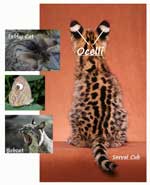
Ocelli, in relation to wild cats, refers to round, white or light-colored, eye-spots on the back of the ears (the ear flaps – ‘pinnae‘). “Ocellus” is the singular. The most common example is on the wings of butterflies. For domestic cats you might see a faint version of it on tabby cats because the …
Note: Some older videos on this page were hosted on Vimeo. That account has now been retired, so a few video blocks may appear blank. Thanks for understanding — there’s still plenty of cat content to enjoy!