Snow leopards carry a genetic mutation of genes: EGLN1 and EPAS1 that help the cat live at high altitude1.
[Note: this is a test page to check page load speeds – although it does have real and new information.]
What affects us affects cats

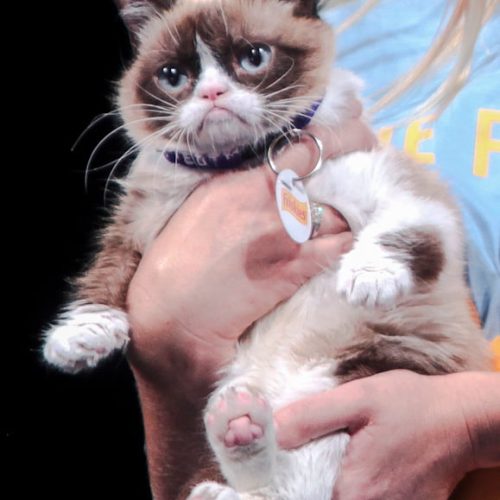
This page has been updated as at May 18, 2022. When it was written Grumpy cat was alive and making tons of money hence it is written in the present tense except for the updates (2) here and at the base of the page. Update: She died young – complications from a urinary tract …
By Sarah Hartwell (of Messybeast.com) Estimates of the frequency of tortoiseshell and calico tomcats range from 1-in-1000 to 1-in-many-thousands though many are misidentified classic tabby-and-white cats. Contrary to myth, tortoiseshell/calico tomcats are not valuable in financial terms (from here on, I’ll use to term tortie to include tortoiseshell, calico and torbie cats). Though many …
A study found that mice which were made to fear a certain smell could pass that particular fear to their offspring in their DNA and their offspring could do likewise¹. This is about animals and humans being hardwired to fear something without ever having experienced that fear or its cause before. It is all …

By Sarah Hartwell When cats are bred for appearance, disease-causing genes risk being overlooked until the gene becomes sufficiently widespread that numerous cases of the genetic ailment appear in that breed. There are a number of factors involved: THE FOUNDER EFFECT: if one or more of the foundation cats has a genetic problem, this …
Snow leopards carry a genetic mutation of genes: EGLN1 and EPAS1 that help the cat live at high altitude1.
[Note: this is a test page to check page load speeds – although it does have real and new information.]
Introduction This is a little news story about hybrid cat DNA and cat species evolution. You won’t read it anywhere else. The story comes from Kathrin Stucki, who is a well know figure in the world of cats partly because, with her husband, Martin, she owns and manages A1 Savannahs in Oklahoma. A1 Savannahs …

I am interested in how breeders of the Manx cat are able to create healthy cats. We know that the gene that causes taillessness in the Manx is a nasty gene, which potentially causes severe health problems in living Manx cats and which causes the death of embryos before birth.
Kittens die before birth when they are homozygous for the Manx gene. “Homozygous” means possessing a pair of identical alleles at a place (locus) on the chromosome. The Manx gene is symbolised by the capital letter “M” because It is dominant. The CFA say it is “incomplete dominant”.
At one time breeders were not aware that kittens were dying in the womb. I presume there was no evidence of their existence except that there was a decrease in the average number of young per litter when Manx mated Manx cat, which is when the offspring will be homozygous to the M gene.
Cats with white moustaches (“mustaches” in American English) are not that rare. These cats do stand out. They have white fur along their whisker pads and then up and around like a fancy, old-fashioned moustache. The white fur is caused by the [weaver_popup_link href=’http://pictures-of-catsorgblog.pictures-of-cats.org/2007/11/piebald-gene-what-does-it-mean.html’ h=’600′ w=’800′]Piebald gene[/weaver_popup_link], also known as the white spotting gene. …
