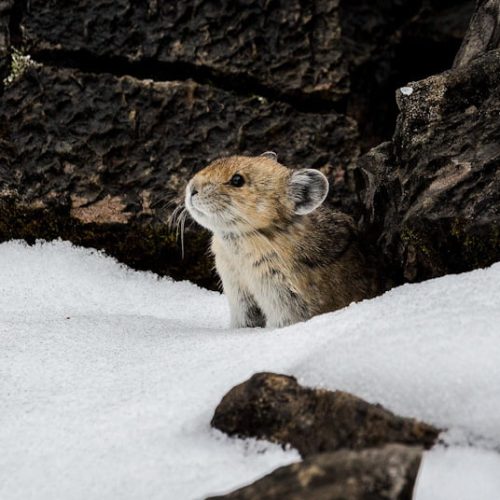
Their favorite food is pika. This small wild cat is also referred to as the manul (proper name) and the Pallas cat (incorrect). They feed largely on pikas (mouse hares), gerbils, voles, mouselike rodents and chukar partridge. They sometimes eat marmots and Tolai hares. THERE ARE MORE ARTICLES ON PALLAS’S CAT AT THE BASE …
A study has found that when domestic cats who like to hunt are fed grain-free food (premium wet food) the number of prey amimals brought home is reduced by 36 per cent. And playing with your cat for 5-10 minutes per day results in a 25 per cent reduction. This is important as predation …
The screaming of the mice. I can’t forget it. It’s a scream that they make at the moment of their death. It is loud enough to be heard by a person five metres away or more; a clear, piercing sound. A full-stop to life. And this, despite the fact that the sounds of mice …
Almost 50% of domestic cats, based on an international survey, are kept indoors for their safety as their owners are worried about traffic, being attacked by a predator or stolen by thieves. The survey found that in the US and Canada 80.6% of domestic cats are kept indoors at all times, a figure higher …
This picture is three days late because National Bird Day in America takes place on 5th January annually. I think it’s quite an apt picture and it is a good photograph. I also believe that the birds are not pigeons but doves! National Bird Day asks the citizens of America to think about their …
I can think of two instances (but there are many more) of exposing, through good intentions, birds to predation by cats which, to me, highlights the need to be at least aware of the potential dangers. Although I’m a cat lover I am also an animal lover and I don’t like to see animals …
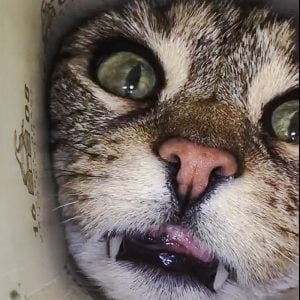
This is not a mouse burrow or hiding place and the cat is not chasing a mouse! But it must be something like it and the point of view of the camera is very much like that which a mouse would have if he was in his burrow being chased by a domestic cat. …
Cat owners must agree to confine their cats to protect wildlife – all of them ideally. In other words there must be a voluntary agreement by cat owners because it’s the only way to stop wildlife predation by domestic cats. Why is this? Because any law enacted by any government which confines cats to …
Note: Some older videos on this page were hosted on Vimeo. That account has now been retired, so a few video blocks may appear blank. Thanks for understanding — there’s still plenty of cat content to enjoy!