Domestic cats often instinctively lick their human caregiver on the hand and sometimes the face. It is called allogrooming. It is a friendly behavior that we see between cat buddies and as cats see us as buddies because we care for them, they lick us too. There are some other reasons why cats lick …
This is an infographic on the well-used cat fancy phrase ‘modified wedge’. It is used all the time in cat association breed standards. I see it used a lot in the Cat Fanciers’ Association (CFA) breed standards and I’ve extracted some examples for the infographic below. The cat fancy administrators were drawn into using the phrase ‘modified wedge’ because they had to find a way to describe the head and face shape of their registered cats. Fundamentally, the wedge shape fits the feline head shape but only in a very general way which is why it is ‘modified’!
This is another infographic which I hope summarises what is going on when a cat coat becomes pale and washed out. A lot of people like the appearance. All the grey cats are a washed out black. The most famous grey purebred cat is the British Blue. The Russian Blue is also a dilute black.
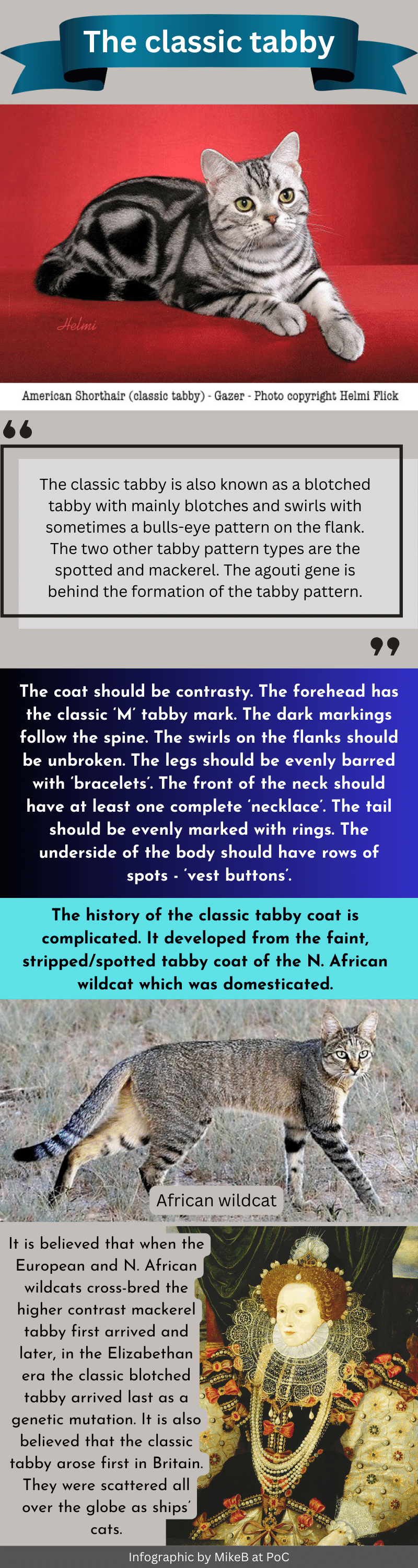
Scroll down for an infographic on the classic tabby cat coat which is also referred to as the blotched tabby. Of the three types of tabby coat: the mackerel, spotted and classic, as stated in the infographic, the classic is believed to have evolved the last in the Elizabethan era due to a genetic mutation. But domestic cat tabby coats have evolved from the original domesticated cats which were all stripped/spotted tabbies as they were domesticated wildcats. Back in the day there was only one type of tabby.
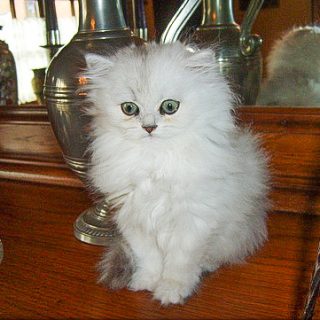
The word ‘chinchilla’ is used a lot in the cat fancy and it is associated with Persian cats. Usually not the extreme bred, flat-faced variety but the traditional doll-faced types. But there appears to be a certain flexibility in the meaning and use of the word which I have illustrated in the infographic. In essence ‘chinchilla’ refers to a type of coat in the cat world, specifically the cat fancy. The name has been taken from the name of a South American rodent with the same coat.
The cat fancy through their cat associations – I typically refer to the Cat Fanciers’ Association (CFA) in the US – not infrequently demand through their breeding guidelines called breed standards that specified cat breeds such as the Siamese and LaPerm have almond shaped eyes. Here is an infographic on the topic which some might find useful. Of course, non-pedigree and purebred cats can also have almond shaped eyes such as my cat whose featured in the infographic.
This is an infographic which summarises albinism in cats. Rarely you will see albino wild and domestic cats. You will see quite a lot of people confusing cats that are completely white with blue eyes or odd-eye colour caused by the dominant white gene and albino cats with light-blue to pink eyes. The eyes are a good way to tell the difference. There are more articles with a reference to albinism below the infographic
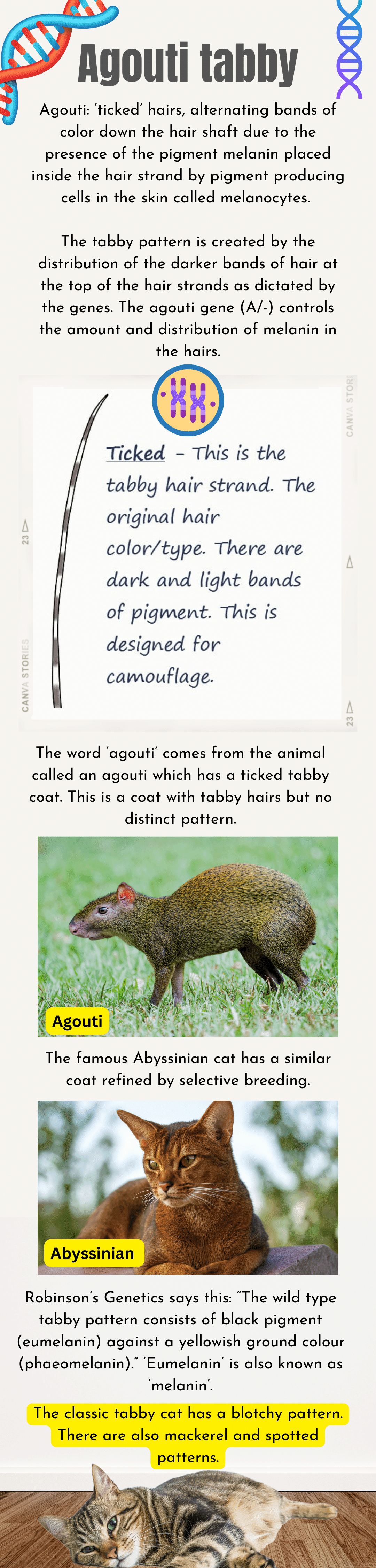
This is my infographic on the agouti tabby domestic cat coat which we all know. It is the original cat coat.
We all know that the domestic cat tabby pattern is the most common and best known as it comes from the domestic cat’s wildcat ancestor the North African wildcat which has a less contrasty spotted/mackerel tabby coat. Domestication introduced the blotched tabby in the 19th century; a late arrival.
Note: Some older videos on this page were hosted on Vimeo. That account has now been retired, so a few video blocks may appear blank. Thanks for understanding — there’s still plenty of cat content to enjoy!