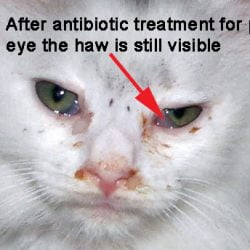
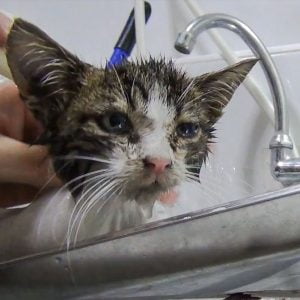
The question in the title incorrectly presupposes that the cat has a secondary bacterial infection. The question is jumping the gun because bacteria might not be the cause of the cat’s symptoms. Initially, upper respiratory infections (URIs) in cats are normally caused by two viral groups: herpesvirus and calicivirus. Antibiotics are ineffective against viruses. …
It’s obvious that if a cat is pawing at her ear or ears it is because the ear flap (pinnae) or ear canal is irritating or hurting her. The question is what is the cause of that irritation or hurt? Here are some possibilities. If you decide there’s something genuinely wrong don’t hesitate to …
There is a perception among some people that stray cats are diseased and can transmit infections to people. I’m reminded of this by a woman in Hong Kong, Icy Song, who runs into stray cats on her way to Lingnan University. She comments as follows: Although I feel pity for the stray cats, I …
Dr Christina Lin, writes of a massive homeless crisis and infectious disease threat in California in The Times of Israel blog. She refers to that terrifying disease known as the bubonic plague which is also referred as the black death. It’s a disease which killed hundreds of thousands of Londoners between 1348 in 1665. …
Yes, domestic cats can get sinusitis (a sinus infection). They have two frontal and small wedge-shaped sinuses. Secondary infections (bacterial infections) of the frontal sinuses occur quite a lot because URI (upper respiratory infections) are common in cats. The signs of feline sinusitis are: sneezing and snuffling a purulent discharge from the nose which …
There’s a report out online about the dangers of antibiotic resistant bugs being transferred from cats and dogs to their owners via saliva. The theory is as follows. The overprescription of antibiotics for pets can result in antimicrobial resistance (AMR). In other words bugs inside pets can become resistant to antibiotics. And there is …
Veterinarians are using antibiotics in a precautionary manner when treating cats because they don’t have a quick test that can determine if antibiotics are really necessary. In short, there is a need with respect to both animals and humans to develop a test which can distinguish between bacterial and viral illnesses. The reason why …
You don’t need to be a doctor in order to know how to respond to and treat cat bites and cat bite infections. You need to apply common sense and to be vigilant. The great problem with cat bites is that the cat will deposit bacteria under your skin almost as if he or …
Note: Some older videos on this page were hosted on Vimeo. That account has now been retired, so a few video blocks may appear blank. Thanks for understanding — there’s still plenty of cat content to enjoy!