Once again, I have employed considerable effort 😎 in converting a complicated study report about the predisposition of the Persian cat breed to getting ringworm, into a quick and easy read, in the form of an infographic. The idea is to make these studies available to everyone; especially those involved in breeding cats including …
It is that time of year in the UK and America and other countries when companion animals can be hit by a pollen bomb hay fever during warm and hot weather. These three species of animal can suffer from hay fever just like humans according to a study which is cited at the base …
China’s first artificial bred Pallas’s cat dies: In a recent report from China, Sundaniang, the country’s first artificially bred Pallas’s cat (aka manul), died in Qinghai Park. Sundaniang was known for her contribution to scientific research on artificial reproduction and had become a beloved figure through her livestreamed daily activities. She was born on …
You could ask the same question about humans, dogs or other animals. And certainly, antibiotics can cause diarrhoea in cats. Note the word ‘can’. You do not have to search far to come to that conclusion. AAD For instance, in the human world, they even have an acronym on the topic. It is AAD …
I’m going to be slightly provocative. But I think cat caregivers should sometimes, gently and politely, challenge their veterinarian. And there’s one particular treatment where this attitude may be important. It is the prescription of antibiotics. I think it is probably known that veterinarians tend to prescribe antibiotics as a precaution. They don’t know …
My research on the feline immune system and in writing about purebred cats over 15 years, leads me to believe that a probiotic supplement or probiotic cat food may be beneficial to the health and welfare of a purebred cat. Below I set out my reasoning for this conclusion in bullet fashion to keep …
I’m referring to the domestic cat. A good source on the Researchgate website, a study entitled Immune System Development in the Dog and Cat by M. J. Day published August 2007 on the Journal of Comparative Pathology, tells me that, “immunocompetentcy occurs around 1.5-3.0 months of age”. I’m requesting the full text of this …
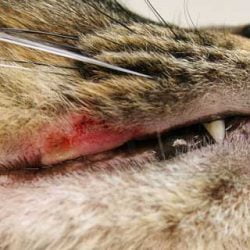
The name “rodent ulcer” is very misleading. It is a lump or granuloma which has nothing to do with rodents. Apparently, these lumps were given the name because they looked like a tiny rodent bite on the skin. The better name is: eosinophilic ulcer. So, what causes this lump? They occur near the canine …
Note: Some older videos on this page were hosted on Vimeo. That account has now been retired, so a few video blocks may appear blank. Thanks for understanding — there’s still plenty of cat content to enjoy!