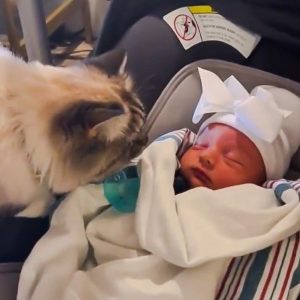
The infographic answers the question in the title and a subsidiary question on whether an older female cat might like to mother a new kitten introduced into the home. The source for the infographic is myself and Jackson Galaxy. The question comes from Quora.com and is the kind of question sometimes asked by caregivers. …
There are two very well-known biologists and cat behaviourists who, in my view, agree on this point which is that the domestic cat sees us as surrogate mothers. We don’t quite know how they really process their observations of us but in terms of their behaviour towards us it reflects a kitten-to-mother relationship. These …
Yes, there is evidence on the internet from Maine Coon (MC) owners in photographs and videos that MCs like to cross their forelegs when resting. You see it all the time but you are less likely to see it in random bred cats. Well, it is very hard to produce a definitive and accurate …
My conclusion from my discussion below is that domestic cats can get confused when they are licking their owner’s passive hand at a time when there is no petting and relate to the hand as food, perhaps a prey animal and bite it. It is an instinctive mental aberration brought about because of conflict …
This is a slightly strange video. The cat’s behaviour certainly bemuses the male half of the couple who own the cat. He can’t believe it. It is believable. But why? My instinctive response without trying to research an answer is that it must be one of two reasons or both together: Smell (olfactory) – …
This is an interesting phenomenon which is discussed on the Reddit.com website. One of the users says that their cat refuses to go on the couch or bed unless there is a piece of paper on the furniture upon which he can sit as you see in the photograph. The $64,000 question is why? …
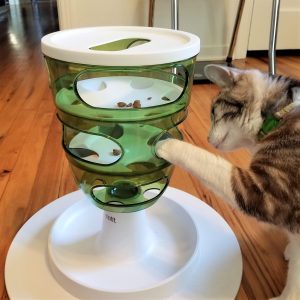
“Contrafreeloading” is a made-up word. It was created by animal psychologist Glenn Jensen in 1963. Scientists like to make their use of language harder to understand. It means behaviour which is against “contra” freeloading which means to get something easily. In other words when behaviour is contrafreeloading it is behaviour that requires more effort …
I’m going to rely on Chapter 19 of Jackson Galaxy’s book Total Cat Mojo to answer the question in the title. Jackson calls timid cats “Wallflowers”. They are wallflowers because of their genetics, perhaps a lack of early years socialisation, threats in the environment or a combination of all these. This is a long …
Note: Some older videos on this page were hosted on Vimeo. That account has now been retired, so a few video blocks may appear blank. Thanks for understanding — there’s still plenty of cat content to enjoy!